Del Norte Fire Safe Council
PO Box 1135, Crescent City, CA 95531
Del Norte
Fire Safe Council

Del Norte Trail and Fireline Project
The Del Norte Fire Safe Council is working in partnership with the USDA Forest Service, Six Rivers National Forest, to restore and maintain key trail systems within the Smith River National Recreation Area and the Gasquet Ranger District. This work supports two connected goals: improving public access to some of Del Norte County’s most valued forest trails, and strengthening wildfire readiness by restoring trail corridors that can also function as access routes and pre-treated firelines during fuels work, prescribed and cultural burning, and wildfire response.
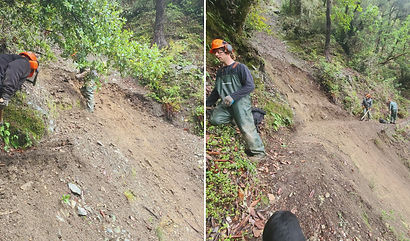
The Smith River National Recreation Area is one of the wettest and most densely vegetated areas of California. Heavy rainfall, rapid brush growth, fallen trees, soil movement, slides, and post-fire vegetation changes create ongoing maintenance challenges. When trails become blocked or narrowed, they are harder for the public to enjoy and harder for crews to use during forest health and fire-response operations. Through this project, DNFSC crews are using hand tools, saws, brushing equipment, and field-based trail maintenance practices to reopen corridors, remove downed logs and hazard material, repair tread and drainage, restore water bars, and document future maintenance needs.
The larger project includes maintenance across approximately 25.8 miles of trail, including Elk Camp Ridge, French Hill, Craigs Creek, Myrtle Creek, Little Bald Hills, Stony Creek, High Dome, and South Kelsey. Work is being completed to Forest Service trail design parameters and with attention to sensitive botanical, wildlife, cultural, and waterway resources.
To date, DNFSC crews have completed concentrated restoration and maintenance work on Craigs Creek Trail, Elk Camp Ridge Trail, High Dome Trail, Stony Creek Trail, and the lower section of French Hill Trail. The project-to-date field reports document 14 project days, 69 reported crew person-days, approximately 17.2 trail miles restored or maintained, and 420 logs removed. Three trail systems that had limited or blocked access were restored to full accessibility, while additional trail segments were maintained for continued public and operational access.
This project reflects DNFSC’s broader mission of building wildfire resilience through practical, place-based work. By restoring trails before they are needed in an emergency, the project improves recreation, protects access, reduces trail hazards, supports long-term forest stewardship, and gives firefighters better options for moving through the landscape when conditions matter most.


#1E02
Craigs Creek Trail #1E02
Craigs Creek Trail has received the largest share of project-to-date work per mile. Crews worked on the trail in December 2025 and again in May 2026, addressing heavy log accumulation, slide and slump impacts, drainage needs, brushing, tread repair, and hazard-tree material.
During the December work period, crews focused on the trailhead-to-landslide section near mile 1.5 and continued from the landslide area toward approximately mile 2.2. Work included clearing downed logs, reopening the trail corridor, repairing water bars and drainage features, and improving tread through areas affected by slide debris and soil movement. The December entries documented substantial log removal and drainage repair, including 250 logs removed or cut back and approximately 13 drainage features repaired.
On May 18, 2026, a four-person crew returned to Craigs Creek and worked from approximately mile 3.8 back toward the trailhead. The crew removed snags and remaining trees blocking the route, completed light brushing, and documented that Craigs Creek Trail was opened all the way and fully accessible.
Project-to-date results for Craigs Creek: 3 work days, 16 reported crew person-days, approximately 3.8 miles worked, 312 logs removed, and the full trail reopened for access. Continued monitoring is recommended at the landslide and drainage areas, especially after rain events.
#2E04
Elk Camp Ridge Trail
Elk Camp Ridge Trail received five days of work between May 19 and May 29, 2026. Crews advanced progressively from the trailhead through the lower 0.3 mile, then to 0.7 mile, 2.3 miles, 4.3 miles, and finally to the end of the trail.
Work included moderate to heavy brushing, logout, clearing burnt brush and post-fire vegetation, removing downed trees, addressing hazard-tree material, and scouting trail conditions before and after work. By the end of the work sequence, the trail was documented as fully accessible.
Crews also identified important follow-up needs. Significant erosion is occurring in areas affected by lack of previous maintenance and post-fire conditions. Recommended erosion-mitigation locations have been identified and shared for future work. Additional drainage improvements, water bars, and tread repairs will help reduce resource damage and protect the trail through future wet seasons.
Project-to-date results for Elk Camp Ridge: 5 work days, 16 reported crew person-days, approximately 8.1 miles worked, 66 logs removed, and the trail restored to full accessibility.


.jpg)


#3E02
High Dome Trail
High Dome Trail work was completed between May 30 and June 2, 2026. Crews worked from the trailhead through 0.3 mile, 0.9 mile, 2.8 miles, and then to the north High Dome Trailhead at approximately 4.1 miles.
The work included heavy brushing, logout, snag and hazard-tree removal, tread repair, weedeating through meadow sections, and scouting for additional maintenance needs. Crews restored access through dense growth, improved narrow and eroding tread sections, and reopened meadow and forested portions of the corridor.
Field reports show steady progress over the four-day sequence: tread work was completed for the first two miles, the first three miles were fully accessible by June 1, and the full trail was documented as accessible on June 2.
Project-to-date results for High Dome: 4 work days, 24 reported crew person-days, approximately 4.1 miles worked, 39 logs removed, 1–3 drainage features repaired, and the full trail restored to accessibility.
Follow-up monitoring is recommended for switchbacks, future windfall, fast-growing meadow vegetation, and drainage needs in the first quarter mile.
#2E19
Stony Creek Trail
Stony Creek Trail was worked on June 3, 2026, from the trailhead to the USFS boundary near Stony Creek. A seven-person crew completed light to moderate brushing, focused especially on the latter half of the trail toward Stony Creek, and removed one small log.
The trail was documented as open for traffic at the end of the work day. Crews also took specific resource-protection measures, avoiding work on private property and avoiding cutting spring wildflowers in sensitive areas.
Project-to-date results for Stony Creek: 1 work day, 7 reported crew person-days, brushing completed, one log removed, and the trail opened for traffic. Follow-up needs include tread repair on the last half of the trail and drainage work in the middle portion before the next wet season.


#2E25
French Hill Trail
DNFSC crews worked on the lower section of French Hill Trail on June 3, 2026, from the trailhead to approximately 0.7 mile. A six-person crew completed moderate brushing and logout along the lower trail segment.
The crew generally brushed 5–10 feet above the trail and scattered cut brush below the tread to avoid concentrating fuels directly below the trail. At completion, the lower 0.7-mile segment was documented as well maintained for continued access.
Project-to-date results for Lower French Hill: 1 work day, 6 reported crew person-days, 0.7 mile maintained, 2 logs removed, and the lower trail corridor improved for continued use.
#1E01
Myrtle Creek Trail
Planned work area: approximately 1.0 mile
Trail class / designed use: Trail Class 2, hiker/pedestrian
Myrtle Creek Trail is a shorter pedestrian trail included in the DNFSC–Forest Service trail maintenance agreement. Because of its hiker-focused design, the work on this trail will emphasize restoring a clear, walkable corridor while protecting the natural character of the trail. Crews will assess the route for encroaching vegetation, downed logs, drainage issues, tread damage, and any small slumps or washouts that may limit access.
Planned maintenance will likely include brushing vegetation back from the trail prism, removing fallen limbs or logs, cleaning debris from the tread, and improving drainage where needed so the trail remains passable through the wet season. As with the rest of the project, Myrtle Creek work will help improve recreational access while keeping the corridor available for forest management and emergency response needs.

#1E03
Little Bald Hills Trail

Planned work area: approximately 4.5 miles in the project mileage table; the operating plan lists 5.0 miles
Trail class / designed use: Trail Class 3, pack and saddle
Little Bald Hills is one of the larger remaining trail segments in the project. As a pack-and-saddle trail, the maintenance standard requires a wider and taller cleared corridor than a foot trail, allowing for safe passage by stock users as well as hikers and mountain bikers. DNFSC crews will evaluate the trail for brushing needs, downed trees, tread narrowing, drainage problems, and any sections where vegetation or debris has reduced access.
Planned work will focus on reopening the trail corridor to the appropriate design parameters, clearing logs and brush, restoring tread where needed, and improving water movement off the trail surface. This work will support recreational use while also strengthening the trail’s value as a potential access route and pre-treated fireline during fuels work or wildfire response.
#4E06
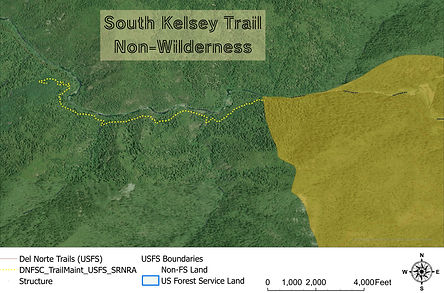
South Kelsey Trail
South Kelsey Trail is another pack-and-saddle route included in the project’s remaining summer work. This trail will be reviewed for downed logs, brush encroachment, drainage needs, tread damage, and overhead or standing hazard material that could affect public access or crew movement.
Planned maintenance will include brushing to the appropriate stock-travel corridor, removing obstructions from the tread, dispersing cut vegetation away from the trail, and repairing drainage or tread concerns where needed. Completing this work will help keep South Kelsey available for recreation and improve its usefulness as part of the broader trail-based access network for forest stewardship, fuels reduction, and wildfire operations.